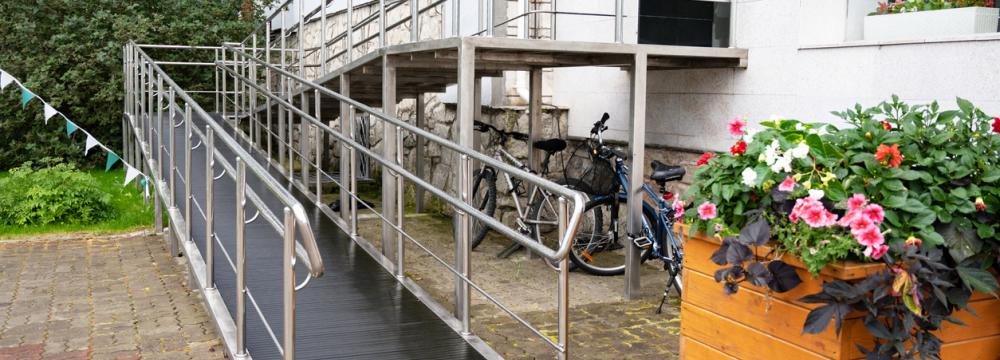
Housing in Canada includes a range of options such as rentals, shelters, and accessible housing for people with disabilities. Rental housing varies in cost depending on the city and type of accommodation. Emergency shelters are available for individuals and families in urgent need of temporary housing. Accessible housing is also offered in many communities, with features designed to support people with mobility or other disabilities.
Understanding Accessible and Affordable Housing
An accessible and affordable housing unit has two characteristics. First, it is designed to respond to the needs of people with physical limitations or disabilities. Secondly, it is financially affordable to low- or moderate-income households.
Such housing units may include access ramps, elevators, wide doors, or adapted bathrooms. They foster your independence and quality of life, providing you with a living environment that's safe, secure, and effectively adapted to your needs.
In Canada, housing costs can be high. Affordable and accessible options provide decent and inclusive living conditions, countering social exclusion and fostering integration.
How to Request an Accessible and Affordable Home
In this section, we have included essential information to help you apply for an accessible and affordable housing unit.
Accessibility and affordability often go together, as numerous affordable housing programs also include options for people with specific accessibility needs.
When searching for an affordable home, you can often select relevant accessibility criteria using search filters.
The following are key links and resources by province, territory, and main municipalities to effectively guide your search.
Alberta
The Alberta government webpage Affordable Housing Programs provides information about different subsidized housing options for low-income people, including families, seniors, and people with disabilities.
Types of affordable housing options
- Community Housing
- Subsidized apartments for low-income families and individuals.
- Rent fees are 30% of the household's total annual income, and they include heating, water, and sewer expenses.
- Seniors Apartments
- Homes for people of age 65 or older who can live independently.
- Rent fees are 30% of the adjusted household income, and they include heating, water, and sewer expenses.
- Seniors Lodge
- Safe housing for seniors who need low to moderate care.
- Fees vary according to the level of care and services provided.
- Special Needs Housing
- Designed to respond to the specific needs of people with a physical or mental disability.
- They include facilities such as access ramps, adapted kitchens and accessible bathrooms.
How to apply as a person with a disability
- Check whether you are eligible:
- Your income should be lower than the limit set for your region.
- You must be a Canadian citizen or a permanent resident.
- Answer the questions in this webpage.
- Select a housing provider:
- After answering the questions, browse through the available options posted.
- Select a local housing provider that offers a housing program that meets your needs.
- A list of providers is available at your local city hall or on the government's website.
- Enter your personal information, including your specific housing needs.
- Include supporting documents:
- Proof of income.
- Identity document.
- Medical documents describing your accessibility needs.
- Submit your form to the housing provider. Some applications can be submitted online or by mail.
- Your application will be assessed according to your specific needs, your income, and your current housing situation.
- After submitting your application, please make sure to follow up by contacting the provider for any updates or questions.
British Columbia
BC Housing's Subsidized Housing webpage provides information about options for low-income people including families, seniors, and people with disabilities.
Types of subsidized housing options
- Community housing
- Subsidized apartments for low-income families and individuals.
- The rent rate is normally calculated according to the household's income.
- Housing units for seniors
- Homes for seniors who can live independently.
- The rent rate is normally calculated according to the household's income.
- Adapted housing units for people with disabilities
- Homes designed to respond to the specific needs of people with a physical or mental disability.
- They may include facilities such as access ramps, adapted kitchens and accessible restrooms.
Eligibility
- Income: your income level should be lower than the limit set by BC Housing.
- Status: Canadian citizen, permanent resident, or refugee status.
- Place of residence: you must live in British Columbia and be financially independent.
How to apply as a person with a disability
- Prepare your supporting documents:
- Proof of income.
- Proof of citizenship or immigration status.
- Medical documents stating your disability/disabilities and specific housing needs.
- Submit your application:
- Complete the online application form at the Housing Registry.
- If you prefer using a paper version, contact BC Housing at 604-433-2218 or 1-800-257-7756 to obtain a copy.
- Select a housing provider:
- When you submit your application, you can select specific housing providers or preferred locations.
- Submit supporting documents:
- Submit all required documents, such as proof of income and medical reports.
- After applying:
- Your application will be assessed according to your needs, income, and the availability of housing units.
- Wait times will vary according to demand and availability.
- Update your information as needed: you must inform BC Housing of any changes in your situation or contact.
Please note: the list of utilities included in your rent may vary according to the housing provider.
Manitoba
Manitoba Housing's webpage about Social Housing Programs explains subsidized housing options for low- to moderate-income individuals, seniors, and families.
Types of subsidized housing options
- Community housing
- Apartments, attached houses, duplexes, and houses for low-income families and individuals.
- Rent rates are calculated as a percentage of the household's total gross income, generally 30%.
- Housing units for seniors
- Homes for people of age 65 or older who can live independently.
- Rent rates are calculated as a percentage of the household's income.
- Adapted homes for people with disabilities
- Designed to respond to the specific needs of people living with a physical or mental disability.
- They may include facilities such as access ramps, adapted kitchens and accessible bathrooms.
Eligibility
- Income:
- Your income should be lower than the limit set by Manitoba Housing. This varies according to household size and location.
- Status:
- Canadian citizen, permanent resident, or refugee status.
- Place of residence:
- You must live in Manitoba and be financially independent.
How to apply as a person with a disability
- Select your desired location:
- Consult Manitoba Housing's districts map to identify potential locations.
- Download and complete the application form:
- Download and fill out the application form.
- If you don't have a printer, you can request a paper copy by calling 204-945-4663 or 1-800-661-4663, or in person at the Manitoba Housing offices.
- Provide supporting documents:
- Proof of income.
- Proof of citizenship or immigration status.
- Medical documents stating your disability/disabilities and specific housing needs.
- Submit your application:
- Send the completed and signed form by mail:
Manitoba Housing, 352 Donald Ave, Winnipeg (Manitoba), R3B 2H8
- Send the completed and signed form by mail:
- Or submit it in person at a Manitoba Housing office.
- Update your information:
- Timely inform Manitoba Housing of any changes in your housing needs or contact information.
After you apply
- Your application will be assessed according to your needs, income, and availability of housing units.
- Wait times vary according to demand and availability.
- One housing offer will be made according to your preferences and availability.
Please note:
- The monthly rent is calculated as a percentage of your household's income, generally 30%.
- Rent fees may include certain utilities such as heating, water, and sewer expenses, but other costs such as electricity or parking may be extra.
New Brunswick
New Brunswick's Public Housing and Rent Supplement Programs provide subsidized housing options to low-income people, including families, seniors and people with disabilities.
Types of housing programs
- Public housing
- Subsidized apartments for low-income families and individuals.
- The rent rate is generally equivalent to 30% of the household's income.
- Rent supplement
- A financial support provided to reduce your housing costs in the private market.
- Beneficiaries pay roughly 30% of their income, the rest is covered by the supplement.
Eligibility
- Your income should be lower than the limit set by the New Brunswick government.
- You must be a Canadian citizen, permanent resident, or have refugee status.
- You must live in New Brunswick.
How to apply
- Prepare the required documents:
- Proof of income.
- Proof of citizenship or immigration status.
- Medical documents stating your disability/disabilities and specific housing needs.
- Submit your application:
- Contact your nearest regional office of the Ministry of Social Development to obtain an application form.
- Complete the form, providing all the required information.
- Wait for the assessment:
- Your application will be assessed according to your specific needs, your income, and the availability of housing units.
- Receive a response:
- Once your application is processed, you will be informed about your application status and next steps.
Please note:
- The list of utilities included in your rent rate may vary according to the housing provider.
- Rent support programs are available for eligible individuals.
Newfoundland and Labrador
The Newfoundland and Labrador Housing Corporation (NLHC)'s Rental Housing Program offers affordable homes to low-income households unable to access adequate housing in the private market.
Types of housing options:
- Housing for families: apartments, attached houses and other kinds of housing units for low-income families.
- Housing for seniors: homes adapted to low-income seniors' needs.
- Housing for non-elderly single persons: homes for low-income single individuals who are not seniors.
- Adapted housing for individuals with disabilities: housing units designed to respond to the specific needs of people with a physical or mental disability.
Eligibility
- The household's total income must be lower than the limit set by the NLHC.
- Housing needs:
- Your current housing unit is adequate, but you pay more than 30% of your total income for rent and heating.
- Your current housing unit is inadequate, and an adequate home in your region would cost 30% or more of your total income.
How to apply as a person with a disability
1. Prepare your supporting documents:
- Proof of income.
- Proof of citizenship or immigration status.
- Medical documents stating your disability/disabilities and specific housing needs.
- Submit your application:
- Specific forms are available for different regions:
- Avalon: PDF, online application.
- Corner Brook: PDF, online application.
- Gander: PDF, online application.
- Goose Bay: PDF, online application.
- Grand Falls: PDF, online application.
- Marystown: PDF, online application.
- Stephenville: PDF, online application.
- Specific forms are available for different regions:
- Attach all required documents, such as proof of income and medical reports.
- Submit your application at your nearest NLHC regional office. You can find the contact details for such regional offices on the NLHC website.
After you apply
- Your application will be assessed according to your needs, income, and the availability of housing units.
- Wait times vary according to demand and availability.
- You should inform the NLHC about any changes in your situation or contact details, so your application remains up to date.
Please note:
- Rent rates are usually calculated at 25% of the household's total monthly net income.
- Details about utilities included in your rent may vary from one housing unit to another.
For more information or to start an application, visit the Newfoundland and Labrador Housing Corporation rental housing program webpage.
Northwest Territories
The Canada-NWT Housing Benefit (CNHB) program is funded by the federal government and administered by Housing NWT. It supports households who use more than 30% of their gross income to pay rent.
Eligible households may receive rent support up to $800 per month.
Eligibility
- Status: Canadian citizen or permanent resident.
- Age: 19 years or older.
- Place of residence: the Northwest Territories for at least 12 months at the time of applying.
- Income: the combined income of all adults of age 19 or older must be below the Core Need Income Threshold (CNIT), as set by the National Occupancy Standard for your local community.
- Percentage of income dedicated to rent: over 30% of gross income is used to pay rent fees (including rent and utilities).
- You must rent a home from a Northwest Territories approved renter and not receive any other housing benefit or subsidy.
- Unapproved types of housing:
- Units managed by an organization that receives a government subsidy for operations purposes.
- Bedrooms in a housing unit where the owner lives.
- Retirement homes or nursing care homes.
- Social housing.
- Shelters.
- Crisis care facilities.
- Owner-occupied housing.
- Staff housing.
- Students’ residences.
- Housing cooperatives.
- Eligible sources of income:
- Employment income.
- Employment insurance.
- Short-term worker's compensation.
- Short-term disability.
- Alimony payment.
- Training allowance.
- Canada pension.
- Old-age security.
- Guaranteed income supplement.
- Superannuation.
- Private pension income.
- RRSP (Registered Retirement Savings Plan) or RRIF (Registered Retirement Income Fund).
- Tax returns: submitting an income statement to Canada every year.
- Not owning a home.
How to apply
- Prepare your supporting documents:
- Current rental lease.
- Proof of income.
- Canada Revenue Agency notice of assessment for the previous fiscal year.
- Government-issued ID for each household member aged 19 or older.
- Utilities bills (electricity, heating, water) if such expenses are paid by you.
- Download and complete the application form.
- Submit the application:
- Email: CNHB@gov.nt.ca
- Mail: Housing NWT, C. P. 2100
Yellowknife NT, X1A 2P6 - Fax: 867-669-7901.
After submitting your application, Housing NWT will communicate with you once your application is processed.
Please note:
- This is a non-taxable benefit, but it must be accounted for as part of the household's annual income and must be declared to the Canada Revenue Agency. A T5007 slip is issued every year.
- Applications are accepted throughout the year.
For more information:
- Call 1-855-698-2642, or
- Send an email to CNHB@gov.nt.ca, or
Visit Canada-NWT Housing Benefit.
Nova Scotia
The webpage Nova Scotia Housing Programs describes several housing support initiatives for people who live in the province.
Programs
- Community Housing Acquisition Program:
- Supporting community organizations so they acquire properties to increase the affordable housing offer.
- Canada-Nova Scotia Targeted Housing Benefit:
- Providing direct financial support to low-income households so they can meet their housing needs.
- Affordable Housing Development Program:
- Encouraging the construction of new affordable homes through partnerships with developers and organizations.
- Land for Housing Program:
- Making provincially owned land available for affordable housing development.
- Down Payment Assistance Program:
- Providing financial assistance to first-time buyers so they can purchase a home.
- Accessible Housing Program:
- Supporting home adaptations to improve accessibility for people with disabilities and seniors.
- Housing Repair Program:
- Providing support for emergency and health and safety home repairs.
- Secondary and Backyard Suite Incentive Program:
- Helping homeowners create supportive housing for family members or affordable housing for tenants in their property.
- Survivors of Gender-based Violence Housing Benefit:
- Helping survivors with the cost of their rent.
How to apply as a person with a disability
- Read about the province's programs that support people with disabilities so you can determine the one that best meets your needs.
- Prepare your supporting documents:
- Proof of income.
- Proof or residence in Nova Scotia.
- Medical documentation certifying your disability/disabilities and specifying your housing-related needs.
- Submit your application:
- Download and complete the application form available on the Nova Scotia Housing webpage.
- Send the completed form with supporting documents to the address indicated on the form.
- Wait for the assessment:
- Your application will be assessed according to your needs and eligibility.
- Once your application is processed, you will be informed about its status and next steps.
For more information or to launch an application, visit the webpage Nova Scotia Housing Programs.
Nunavut
The Canada-Nunavut Housing Benefit program is funded by the federal government and managed by the Nunavut Department of Family Services. It provides temporary financial support to individuals and families living in private rental homes during periods of vulnerability or crisis, to help them transition into a more permanent housing option.
How the program works
The program covers the difference between 24% of the household income and the market rent, until the household can access a more permanent housing option. However, the program does not cover the total rent, and recipients must pay for utilities.
Eligibility
- Income: households must have an income and use over 24% of it to pay for market rent.
- Housing: applicants must reside in a private market rental unit and not receive any other housing subsidy (such as public housing, staff housing or student housing).
- Referral: access to the program depends on being referred by partners such as social workers, income assistance staff, shelters, and the Nunavut Housing Corporation.
How to apply
- Get a referral:
- Contact a referring partner, such as a social worker, an income assistance agent, a shelter, or the Nunavut Housing Corporation, to assess your situation and determine whether you are eligible.
- Prepare your supporting documents:
- Proof of income.
- Current lease indicating the rent amount.
- A valid ID.
- Submit your application:
- With help from your referral partner, complete and submit the application form to the Department of Family Services.
- Wait for the assessment:
- The department will assess your application according to eligibility criteria and funds available.
- Once your application is assessed, you will be informed of its status, and next steps if it is approved.
For more information or to start your application, please consult the webpage Canada-Nunavut Housing Benefit or contact the Nunavut Department of Family Services.
Ontario
Settlement.Org's webpage What Is Subsidized Housing offers detailed information to help you access subsidized housing in Ontario.
To find a subsidized housing unit, follow these steps:
- Identify subsidized housing options in your region: most cities keep waitlists for subsidized housing. It is important to get information about availability and wait times in the area where you intend to live.
- Contact relevant organizations:
- The Cooperative Housing Federation of Canada (CHF Canada): this organization explains the evolution of housing cooperatives in Canada and offers links to local cooperatives in Ontario.
- The Ontario Non-Profit Housing Association (ONPHA): this association represents non-profit housing providers offering affordable rental units to low- and moderate-income households, including accessible housing and support services. It provides a list of groups coordinating access, which can support you in your search for an affordable and accessible home.
- Understand special priorities:
- Some categories of applicants, such as survivors of violence and ill treatment, can have priority access to a housing unit.
- Get additional help:
- If you have questions about the type of home that best meets your needs, you can get help at immigrant settlement agencies and other community services organizations. Contact the 211 service for more information.
Please note:
- Wait times for a subsidized home can significantly vary according to the region and local demand. We recommend submitting your application as soon as possible and keeping in touch with providers to follow up on your request.
For more information or to start an application, visit Settlement.Org's webpage What Is Subsidized Housing.
The Ontario government offers a webpage to help you find your local affordable housing services manager. Such managers oversee and coordinate affordable housing programs and social services in their respective areas.
The webpage allows you to:
- Carry a search in your area: enter the name of your municipality or region to find your local services manager.
- Find contact information: so you can request information about affordable housing programs, rent supports, and other available social services.
The Centre Francophone du Grand Toronto (CFGT) offers housing-related financial support to Francophones who are homeless or at-risk of homelessness, as well as other housing support services for low-income Francophones.
Services include:
- Financial support for rent: CFGT can provide financial assistance to pay the first and last months of rent.
- Covering amounts owed for rent or utilities: if you are late in paying, the centre can help pay amounts owed to help you avoid a crisis.
- Support to navigate the housing system: CFGT offers support to better understand and navigate the private and social housing systems, helping clients find appropriate housing.
- Help to apply for supportive housing: if you have specific needs related to mental health, safety or grave illnesses, the centre can help you apply for supportive housing.
General information about housing: CFGT offers basic information in French about housing in the Greater Toronto Area, helping Francophones navigate the local housing market.
Prince Edward Island
Prince Edward Island's Family Housing program provides subsidized housing to low-income families and individuals facing inadequate housing conditions or other specific circumstances.
Types of housing
- Public housing: from studios to four-bedroom units, equipped with essential appliances. Renters must provide their own furniture and maintain tenant insurance.
- Private housing: rental vouchers are available to help cover for rent costs in the private sector.
Eligibility
A local housing council determines whether you are eligible according to the following factors:
- Number of dependents who live with you.
- Annual household income: income before taxes must be lower than the following limits:
- $26,000 for a bachelor.
- $36,500 for a one-bedroom unit.
- $43,000 for a two-bedroom unit.
- $45,000 for a three- or four-bedroom unit.
- Percentage of income dedicated to rent: at least 30% of the household's income is spent for rent of an adequate housing unit.
- Current housing circumstances.
- Other factors: such as household members' health, and the availability of a housing unit that is adapted to the household's needs.
How to apply
- Complete the Application for Family Housing.
- Prepare your supporting documents:
- Proof of income.
- Proof of current place of residence.
- Proof of heating and electricity fees.
- Other documents pertaining to income: pay stubs, documents confirming pension, property tax or insurance record, if applicable.
- Once you complete the online form, a Housing Service representative will be in touch with you to set up an appointment.
- You will be invited to an interview. Bring all supporting documents to verify your eligibility.
Contact details for assistance:
- Summerside: 120 Heather Moyse Drive, Summerside, C1N 5L2. Phone: 902-888-8436.
- Charlottetown: 161 St. Peter’s Road, C.P. 2000, Charlottetown, C1A 7N8. Phone: 902-368-5770.
- Montague: 41 Wood Islands Road, C.P. 1500, Montague, C0A 1R0. Phone: 902-838-0796.
- Souris: 15 Green Street, C.P. 550, Souris, C0A 2B0. Phone: 902-687-7098.
For more information or to start an application, visit the page Apply for Housing Online.
Quebec
The Société d'habitation du Québec (SHQ) oversees various housing assistance programs and provides information on how to apply for subsidized housing across the province. The SHQ collaborates with local housing offices – the Offices municipaux d’habitation (OMH). Each OMH manages applications and waiting lists for its specific catchment area. To apply, you will need to contact the OMH in your municipality. Some of them offer online application tools, while others may require paper forms.
The SHQ also runs housing programs tailored to the needs of people with disabilities:
- Low-Rental Housing (HLM): affordable rental homes – rent is typically set at 25% of the household's income.
- Rent Supplement Program (PSL): financial assistance to help cover rent in the private housing market – tenants pay no more than 25% of their income on rent.
- AccèsLogis Québec Program: supports the development of community and affordable housing projects, including those specifically designed for people with disabilities.
Eligibility
- Status and place of residence: Canadian citizen or permanent resident who lives in the province.
- Income below specific thresholds.
- Assets should not exceed $50,000.
- Demonstrated ability to live independently or with appropriate support.
How to apply
To apply for subsidized housing or home adaptation assistance:
- Identify your local housing office: applications are typically managed by local housing offices (Offices municipaux d’habitation, or OMH).
- Gather supporting documentation: this may include proof of income, residency status, and medical documentation outlining your disability and required accommodations.
- Submit your application: applications can often be submitted online or in person at your local OMH.
- Await assessment: your application will be reviewed to determine eligibility and priority based on need.
The affordable and subsidized housing portal in Quebec City (in French only) offers information about affordable housing for the City of Quebec region. You can submit an online application to access subsidized housing for low-income families. The website explains how to apply, the required documents, and the assessment criteria.
Saskatchewan
Saskatchewan's program Rental Housing for People with Low Income is available in several languages. The programme provides safe and adequate housing units to low-income families, seniors, and people with disabilities. It subsidizes rent according to your level of financial need.
Eligibility
- Income: households must dedicate 35% or more of their annual gross income to rent fees (including rent and utilities).
- Assets: household assets must be worth less than $300,000.
- Annual income before taxes: the household's annual gross income must be below the program's set limit.
- Other criteria: applicants must be legally authorized to reside in Canada and able to live independently, with or without support.
How to apply
- Complete the application form: download and complete the housing application form.
- Prepare the required documents:
- Proof of income (for instance, notice of assessment from the Canada Revenue Agency).
- Proof of assets (for instance, bank statements).
- Valid ID.
- Submit the application:
- Send the completed form and supporting documents to your local housing commission. Local commissions' contact details are available on the Saskatchewan government's website.
After you apply
- Applications are assessed according to financial need and eligibility criteria.
- Priority is given to households with the most urgent needs.
For more information or to start an application, visit the Saskatchewan government's webpage Rental housing for people with low income.
Yukon
Yukon's Rent-Geared-to-Income housing program offers affordable housing to low-income people, including individuals, families, and seniors. Rent is set at 25% of the combined household's monthly gross income.
Eligibility
- You must have been living in the Yukon for at least 12 consecutive months at the time of application. Previous residence periods can be considered if you recently came back to the territory.
- You must not exceed the maximum income limits set for the program.
- Assets must be worth less than $100,000.
- You must have insufficient financial resources to access adequate housing in the private market.
- You must be in good standing with the Yukon Housing Corporation.
How to Apply
- Download and complete the application form.
- Prepare the required documents:
- Identity documents:
- For individuals of age 19 or older: one valid, government-delivered photo ID.
- For individuals less than 19 years-old: one valid, government-delivered ID.
- Proof of income: all household members of age 19 or older must provide their notice of assessment from the Canada Revenue Agency.
- Identity documents:
- Submit the application:
- By mail at the following address:
Yukon Housing Corporation
410 Jarvis Street
Whitehorse, Yukon Y1A 2H5
- In person: deliver your application package at 410 Jarvis Street, in Whitehorse, Y1A 2H5 or at the nearest office of the Yukon Housing Corporation. Offices are open Monday through Friday, 8:30 am to 4:30 pm.
- By fax at 867-393-7597.
Last updated: October 28, 2025
If you are denied service or experience discrimination, you can contact one of the Disability Rights Advocacy Organizations or Legal Clinics listed under “Additional Services”. Alternatively, report the situation through our report form and our team will follow up with you.